
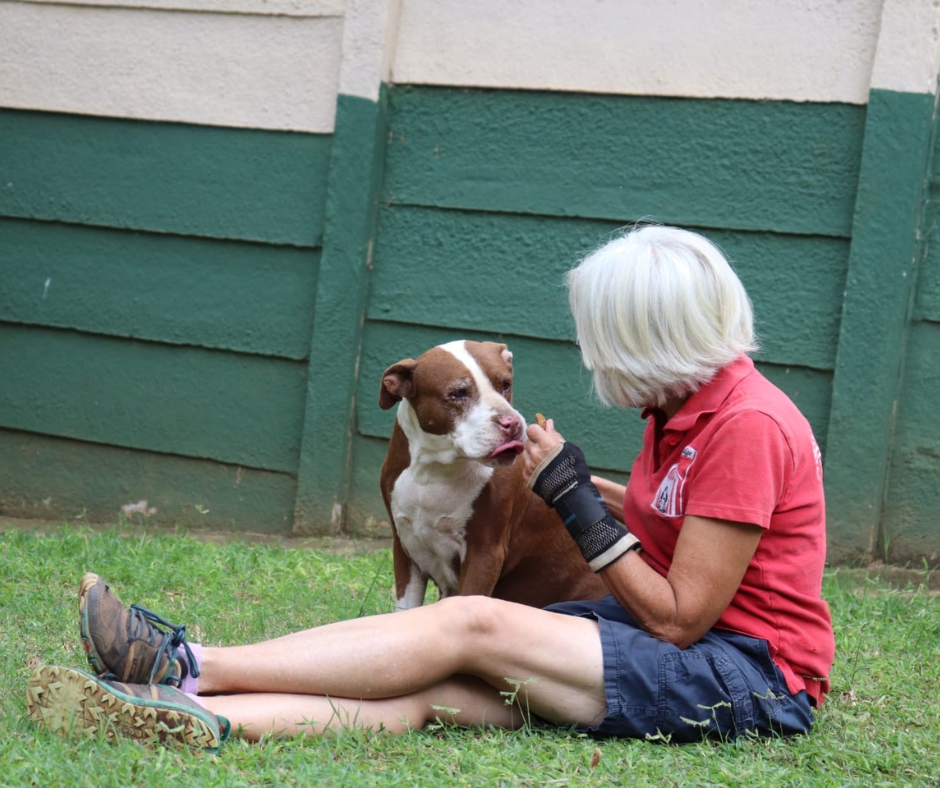
A relatively recent innovation in Conduct Rules in Community Schemes has been the exclusion of certain breeds for consideration in the complex as pets. The breeds excluded are usually American Pit Bull Terriers, Bull Terriers, and Staffordshire Bull Terriers (‘Staffies’). The problem is, “Breed” is not a scientific taxonomic rank. It’s a term used to describe a group of animals within a species that share certain characteristics due to selective breeding by humans. Scientific taxonomy uses a hierarchical system (like kingdom, phylum, class, order, family, genus, species) to classify organisms based on evolutionary relationships and shared characteristics. It has become more and more focused on genetics.
Here’s why “breed” isn’t a taxonomic rank:
Artificial Selection: Breeds are created and maintained by humans through selective breeding, not natural evolutionary processes.
Not a Universal Standard: While breeders may agree on what constitutes a breed within a specific species, there isn’t a universal, scientifically recognized taxonomic rank for “breed”.
Within Species: Breeds exist within a species (e.g., different dog breeds within the species Canis lupus familiaris).
Taxonomic Ranks: Scientific taxonomy has established ranks like kingdom, phylum, class, order, family, genus, and species, which are based on shared characteristics and evolutionary history. In essence, “breed” is a term used by breeders and within specific contexts (like dog breeds or horse breeds) to describe groups of animals with specific traits, but it’s not a recognized level in the formal, scientific system of taxonomy.
There is no scientifically valid definition of a “dangerous dog” based on breed alone.
Breed Is not a reliable predictor of aggression: Scientific studies consistently show that individual behaviour, environment, training, and socialization are far more important factors than breed. A comprehensive review in The Journal of Veterinary Behaviour (2014) concluded that “breed is a poor predictor of behaviour. Breed-specific legislation is not based on science.”
Behaviour is complex and contextual. Aggression is a behaviour, not a fixed trait of a breed. Any dog can bite under the right circumstances – fear, pain, abuse, lack of socialization, or poor training.
Studies like the CDC’s 2000 report noted the difficulty in reliably identifying dog breeds, especially in mixed-breed dogs involved in bite incidents.
Breed-Specific Legislation (BSL) is ineffective. Laws that ban or restrict certain breeds (e.g., pit bulls, Rottweilers) have not been shown to reduce dog bites. Places that repealed BSL and replaced it with breed-neutral dangerous dog laws (focused on behaviour) saw better results.
Public perception Is skewed. Certain breeds are stereotyped because of media reporting. For example, “pit bull” is not a recognized breed but a vague label often applied to muscular, short-haired dogs.
A 2018 study published in Anthrozoös found that media coverage influences public perception far more than bite data.
Summary
There is no such thing as a genetically or inherently “dangerous breed”. The label “dangerous dog” should apply only to individual animals based on their behaviour and history – not on breed. A responsible framework focuses on:
* Owner accountability
* Training and socialization
* Behavioural assessments
* Public education
Here are scientific studies, position papers, and expert statements refuting the idea that any breed is inherently dangerous and showing why behaviour-based, not breed-based, regulation is the scientifically grounded approach:
- Voith, V. L. et al. (2009) – Breed Misidentification
Title: Comparison of adoption agency breed identification and DNA breed identification of dogs
Journal: Journal of Applied Animal Welfare Science
Key finding: Visual breed identification by shelter workers and the public is highly inaccurate, even among professionals.
Implication: Laws based on breed are flawed if breed cannot be reliably identified.
- Patronek, G. J., et al. (2010) – Breed and Risk Analysis
Title: Co-occurrence of potentially preventable factors in 256 dog bite-related fatalities in the United States (2000–2009)
Journal: Journal of the American Veterinary Medical Association (JAVMA)
Key finding: In 85%+ of fatal cases, multiple human-related factors were present (e.g., no supervision, no neutering, abuse, or poor containment). Breed could not be reliably determined in 80% of cases.
Conclusion: Breed was not a significant factor in fatal attacks.
- Duffy, D. L., & Serpell, J. A. (2008) – Breed and Aggression
Title: Breed differences in canine aggression
Journal: Applied Animal Behaviour Science
Key finding: Small breeds (e.g., Dachshunds, Chihuahuas) scored higher in owner-directed and stranger-directed aggression than breeds typically labelled “dangerous.”
Conclusion: Breed-specific generalizations are misleading. The inherent assumption is that all members of a given breed conform to a set of behavioural dynamics, and this simply isn’t true.
PROFESSIONAL ASSOCIATIONS’ POSITIONS
American Veterinary Medical Association (AVMA)
“Breed is a poor sole predictor of aggressive behaviour… breed-specific bans can lead to a false sense of security.”
Even if the dog that bites is small, they could carry a life-threatening disease like rabies, and even a dog that has been vaccinated could transmit tetanus.
Centres for Disease Control and Prevention (CDC)
In 2000, the CDC stopped tracking breed data in dog bites, citing the lack of reliable data and the complexity of factors involved in aggression.
“Dog bite statistics are not reliable for establishing breeds that are more likely to bite.”
Studies show that breed is a poor predictor of individual behaviour. Behaviour is shaped more by training, socialization, and individual temperament than by breed label.
WHY BREED-SPECIFIC LEGISLATION (BSL) FAILS
It’s ineffective in reducing dog bites. Studies of BSL in Canada, Spain, and the U.S. show no measurable reduction in bites after breed bans:
Calgary (Canada): Switched to breed-neutral laws – dramatic drop in bites through education, licensing, and behaviour targeting.
Spain (2007 study): BSL had no impact on overall dog bite numbers.
The ‘dangerous dogs’ poster child: the Pit Bull.
The American Veterinary Medical Association (AVMA) agrees: “Controlled studies have not identified this breed group (e.g., pit bulls) as disproportionately dangerous.” They’re absolutely right — “pit bull” is not a scientific term. It’s a socio-cultural construct with historical roots, not a formal taxonomy in the way species or subspecies are classified. Here’s a breakdown of the origin and evolution of the term:
Origin of the Name “Pit Bull”
The name “pit bull” comes from dog fighting practices in 18th–19th century Britain:
“Pit” refers to the fighting pit, a small enclosed arena where dogs were made to fight for sport or gambling.
“Bull” comes from bull-baiting, an earlier blood sport where dogs were set on tethered bulls. Dogs used for this were bred to be strong, muscular, and tenacious.
Thus, the term pit bull described a type of dog used in these violent practices, selected for its physical power and aggression. The label became associated with “bull-and-terrier” crosses: dogs bred by combining Old English Bulldogs with terriers, particularly to increase agility and gameness.
The confusion arises because “pit bull” is not a single breed, but a catch-all category. It commonly includes:
American Pit Bull Terrier (APBT) – the breed most historically linked to the term.
American Staffordshire Terrier
Staffordshire Bull Terrier
American Bully
And even mixed-breed dogs with certain physical traits (broad head, muscular build).
This lumping is socio-cultural and often legally or emotionally charged, especially in media and legislation.
“Pit bull,” then, is a folk taxonomy — an informal term rooted in history, culture, and emotion, not biology.
“Pit bull” is a historical descriptor, not a scientific or even formally recognized breed in some kennel clubs (e.g., the AKC doesn’t recognize the APBT, though the UKC does). The term originates from blood sport: dogs bred to fight in pits, descended from bull-baiting dogs. Today, it reflects social perceptions more than consistent genetic or behavioural traits.
The Problem
Because “pit bull” isn’t a clearly defined breed, many laws ban or restrict dogs based on appearance rather than behaviour or genetic profile. This leads to major issues in enforcement, fairness, and scientific validity.
BSL began in earnest in the late 20th century, particularly after widely publicized attacks in the US and UK. Dogs targeted by BSL often include:
* American Pit Bull Terrier
* Staffordshire Bull Terrier
* American Staffordshire Terrier
* Any mixed breed that “resembles” a pit bull
Examples:
UK (Dangerous Dogs Act 1991) bans the ownership of several breeds, including the pit bull type.
USA: Cities and counties across the country have enacted bans or restrictions, but these vary wildly in definition and enforcement.
Enforcement Difficulties
Identification by appearance is extremely unreliable — multiple studies show that shelter workers, police, and even veterinarians misidentify dog breeds up to 87% of the time.
Genetic testing often reveals dogs labelled as “pit bulls” have little or no genetic connection to the American Pit Bull Terrier. Many breeds share genes for aggression, as is evidenced by the dog genome.
Media Narratives and Moral Panic
Media coverage often highlights attacks by “pit bulls,” even when the breed is uncertain or misidentified. Headlines like “Pit Bull Mauls Toddler” trigger emotional responses and reinforce stereotypes, while similar incidents by other breeds rarely name the breed. When people repeatedly hear about “pit bull attacks,” they begin to overestimate the risk. This is a classic case of availability heuristic — the more vivid and recent an example, the more dangerous it feels.
Media reinforces fear, Laws are passed – more dogs are labelled as “pit bulls” – Further stigmatization results. This creates a moral panic — a concept in sociology where a perceived threat to societal values (here, “dangerous dogs”) is blown out of proportion. Public Perception and Stigma becomes attached to the label rather than the phenomenon.
The “Dangerous Dog” Archetype
“Pit bull” has become shorthand for “aggressive” or “unpredictable,” despite contradictory data. Many landlords, insurers, and shelters automatically blacklist dogs identified as pit bulls.
On the flip side, some activists and adopters reframe the “pit bull” as a misunderstood underdog, symbolizing resilience and loyalty. This has created polarized narratives: demonization vs. idealization, both of which oversimplify the reality.
EFFECTIVE ALTERNATIVES
Instead of BSL, experts recommend:
Breed-neutral legislation focusing on dangerous behaviour
Mandatory training/education for owners
Better enforcement of leash, licensing, and fencing laws
Early intervention and behaviour assessments